
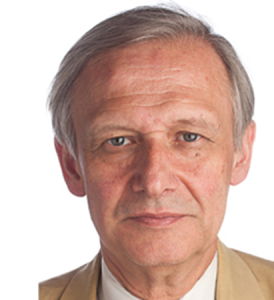
Prof. Sergio Cerutti
Emeritus Professor at Politecnico di Milano.
Sergio Cerutti, Emeritus Professor in Biomedical Engineering at the Department of Electronics, Information and Bioengineering (DEIB) of the Politecnico di Milano, Italy. He has been one of the founding Members and Chair of the Department of Bioengineering, Politecnico di Milano, from 2000 to 2006. He has also been the Chairman of the Bachelor (Diploma Universitario 1996-2000) and Master Degrees in Biomedical Engineering (Corso di Laurea 2010-2012), at the same Politecnico. His research interests are mainly in the following topics: biomedical signal processing (ECG, blood pressure signal and respiration, cardiovascular variability signals, EEG and evoked potentials), medical imaging and multimodalities, cardiovascular modelling, neurosciences, regulation and standards in medical equipments and devices. Since 1983 he has taught a course at a graduate level on Advanced Biomedical Signal Processing at Engineering Faculties (Milano and Roma) as well as at Specialisation Schools of Medical Faculties (Milano and Roma). He has been Elected Member of IEEE-EMBS AdCom (Region 8) in the period 1993-1996. He spent one year (1978-1979) at MIT and Harvard School of Public Health, Cambridge USA and 3 months (y 2000) at Physics Department of IST (Instituto Superior Tecnico, Lisbon, Portugal) with a NATO Fellowship and on sabbatic leave. He is actually Fellow Member of IAMBE, IEEE, AIMBE and EAMBES and Associate Editor of IEEE Trans BME and Physiological Measurements. He is a member of the Steering Committee of the IEEE-EMBS Summer School on Biomedical Signal Processing: he was the local organiser of four Summer Schools held at the Certosa di Pontignano, Siena. He has been Member and later on President of the Ethical Committes of IEO (European Institute of Oncology) and the Cardiological Center “Monzino”, Milano, from 2013 to 2024, as well as Member of the same Committe at the Politecnico di Milano (from 2010 to 2023). From 2002 he is also Chair of Bioengineering Committee of the Engineer Order of Milano Province and even the coordinator of all the Italian Order Commissions in Biomedical Engineering. He has been the recipient of the “IEEE-EMBS Academic Career Achievement Award” (2009) and the “Milan Ambassador Award” (2010), respectively, for his scientific and organisational activites of promoting international scientific events and conferences. He is the author of more than 990 international scientific contributions (Google Scholar), H-Index of 81 (y 2026) with more than 59,800 citations.

Prof. Sridevi V. Sarma
Professor in the Institute for Computational Medicine and the Department of Biomedical Engineering at Johns Hopkins University
She received her B.S. in Electrical Engineering from Cornell University and her M.S. and Ph.D. in Electrical Engineering and Computer Science from the Massachusetts Institute of Technology (MIT). She completed postdoctoral training in the Department of Brain and Cognitive Sciences at MIT. She is currently a Professor in the Institute for Computational Medicine and the Department of Biomedical Engineering at Johns Hopkins University. Her research focuses on the modelling, estimation, and control of neural systems, with particular emphasis on therapeutic electrical stimulation for neurological disorders, including epilepsy and chronic pain. She has been invited to speak at over 70 venues worldwide. Together with her undergraduate and graduate trainees, Dr. Sarma has authored over 80 journal articles, one book, two book chapters, and more than 90 peer-reviewed conference proceedings. She is an inventor on 11 patents and disclosures and has contributed to one FDA-cleared medical device. Dr. Sarma is the recipient of numerous honors, including the Burroughs Wellcome Fund Career Award at the Scientific Interface, the Krishna Kumar New Investigator Award from the North American Neuromodulation Society, the Presidential Early Career Award for Scientists and Engineers, the NIH Outstanding Investigator Award for her research in epilepsy, election as a Fellow of the American Institute for Medical and Biological Engineering (AIMBE), and the Whiting School of Engineering Robert B. Pond Award for Excellence in Teaching.
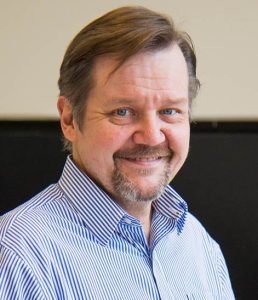
Prof. Jari Hyttinen
Full Professor at the Faculty of Medicine and Health Technology at Tampere University
He received his MSc and PhD from Tampere University of Technology 1986 and 1994, respectively.
His academic work concentrates on developing technology towards precision medicine developing biosignal measurements, bioimaging, and especially computer modelling (in-silico) of biophysical systems including heart and cardiovascular system.
Prof Hyttinen has lately acted as a head of the BioMediTech Unit (over 30 professors and staff of 500) at the Faculty of Medicine and Health technology 2019-2024, and earlier as the head of the Department of Biomedical Engineering at Tampere University of Technology (2008-2012). Prof Hyttinen has been visiting researcher in University of Pennsylvania, USA, and University of Tasmania, Australia 1990, and at Duke, Durham University, USA 1994. He has acted as a visiting professor at University of Wollongong, Australia 2017 and ETH Zurich, Switzerland 2018. He graduated with over 110 MSc and 20 PhDs.
He has served in many positions of trust including Chair of the Finnish Society of Medical Physics and Biomedical Engineering (chair 2001-2004), member of the board and also as the President of the European Alliance on Medical and Biological Engineering Sciences EAMBES (president 2015-2017). He is currently a council member of EAMBES, and member of the board of the EAMBES Fellows committee and member of the administrative council of the IFMBE. He is also EAMBES Fellow (www.eambes.org/fellows).
He has coordinated several large domestic and international research projects. At the moment he is coordinator of 10M€ EU Horizon project SMASH-HCM aiming to develop multilevel and multimodal digital twin solution for hypertrophic cardiomyopathy stratification..
Prof Hyttinen has twelve patent publications with eight grated patents. Total number of peer reviewed publications: over 400 including over 200 journal articles 8 book chapters and over 200 conference paper with o ver 10 000 citations and h-index 55 (Google Scholar 7.05.2026).
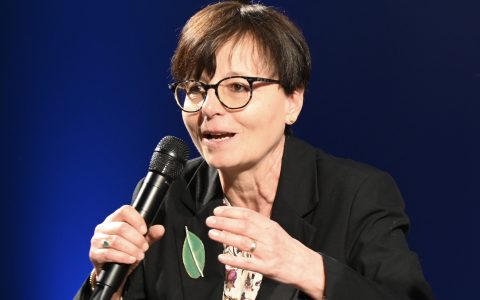
Prof. Maria Chiara Carrozza
Professor of Biomedical Engineering and Biorobotics at University of Milan-Bicocca, Department of Psychology
Former President of the National Research Council (CNR), she served as Chair of the European Science Advisors Forum (ESAF) and of the G6 Research Network in 2024. As a member of the European Commission's High-Level Expert Group for FP10, she contributed to the report "Act, align, accelerate." From 2007 to 2013, she was Rector of the Sant'Anna School of Advanced Studies, and from 2013 to 2018, she was a member of the Italian Parliament and a member of the European and Foreign Affairs Committee. She was Minister of Education, University, and Research from 2013 to 2014. From 2018 to 2021, she was Scientific Director of the IRCCS Don C. Gnocchi.